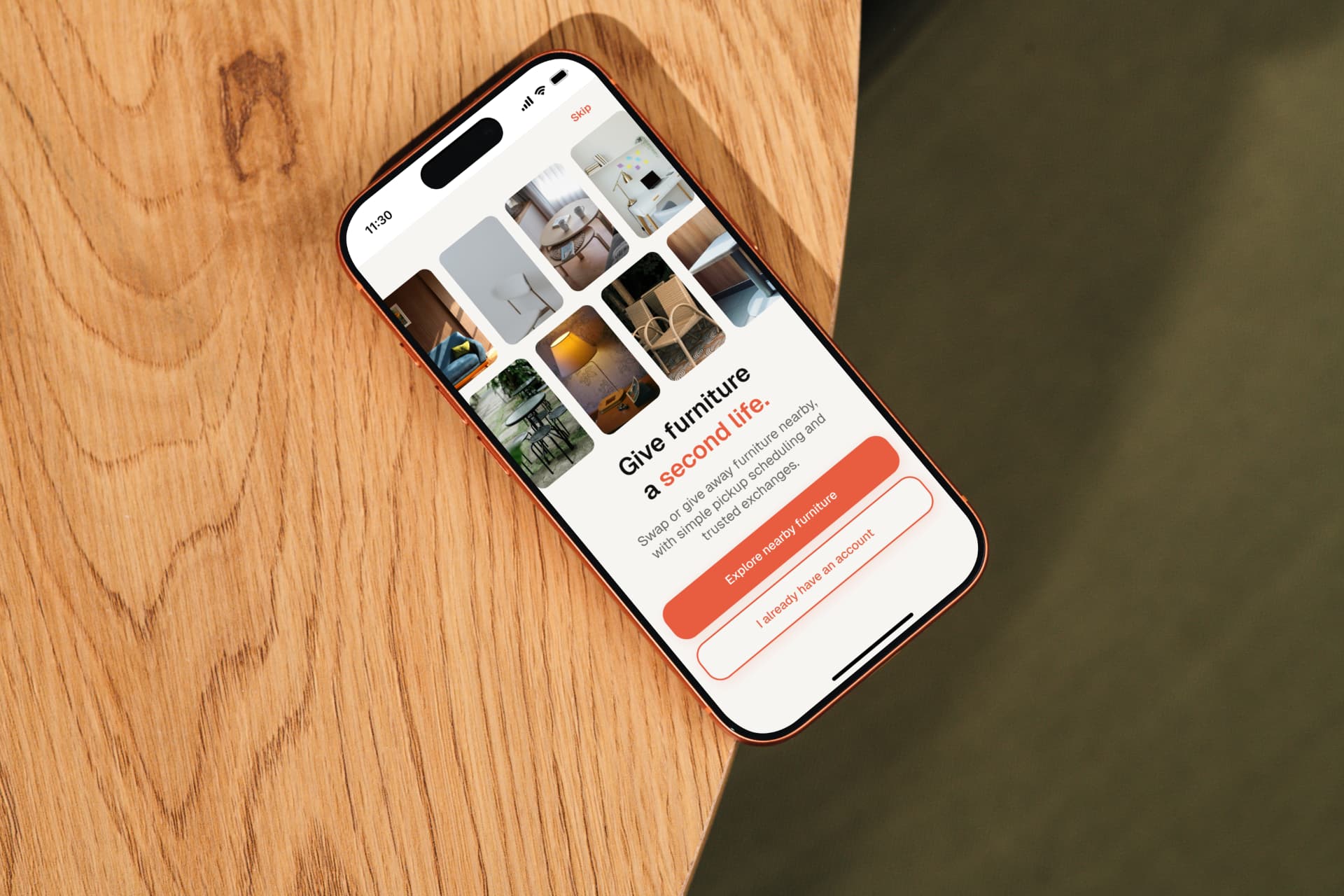
Case 01 · Self-directed concept
FS.dk
People could find furniture. The hard part was agreeing on when to pick it up.
Overview / 01
Case 01 · Self-directed concept
A furniture-sharing app for neighbours in Copenhagen.
The problem. People could find furniture. The hard part was agreeing on when to pick it up.
My contribution. I designed a pickup flow that brings availability, requests and confirmation into one place.
FS.dk supports swapping and giving away furniture without money changing hands. The prototype explores pickup coordination across discovery, requesting and publishing.
- Role
- Research · Product design · Prototyping
- Timeline
- 8 weeks
- Tools
- Figma · FigJam
The problem / 02
Users don't struggle to find furniture. They struggle to coordinate pickups.
Existing platforms leave timing and availability to chat. People repeat the same questions, availability is unclear, plans change and pickups can fail.
Coordination
Too much back-and-forth to agree on a pickup.
Reliability
Informal plans make cancellations and no-shows easier.
Trust
People want more context before meeting a stranger.
Research / 03
Agreeing on a pickup took more effort than finding the item.
I interviewed five people in Copenhagen who had recently given away or picked up furniture through Facebook Marketplace, DBA and local exchange groups.
- 5 interviews
- 30–45 minutes
- Semi-structured
- 01
Coordination took more effort than discovery.
Finding the item was quick; agreeing on a time was not.
- 02
People wanted more context before meeting a stranger.
Small trust signals mattered more than more profile fields.
- 03
A failed pickup quickly reduced trust in the platform.
One no-show coloured the whole experience of the service.
The design decision / 04
Move pickup coordination into the product instead of leaving it to open-ended chat.
Browsing and listings could stay familiar. The part worth redesigning was what happened after someone wanted an item.
Make availability visible
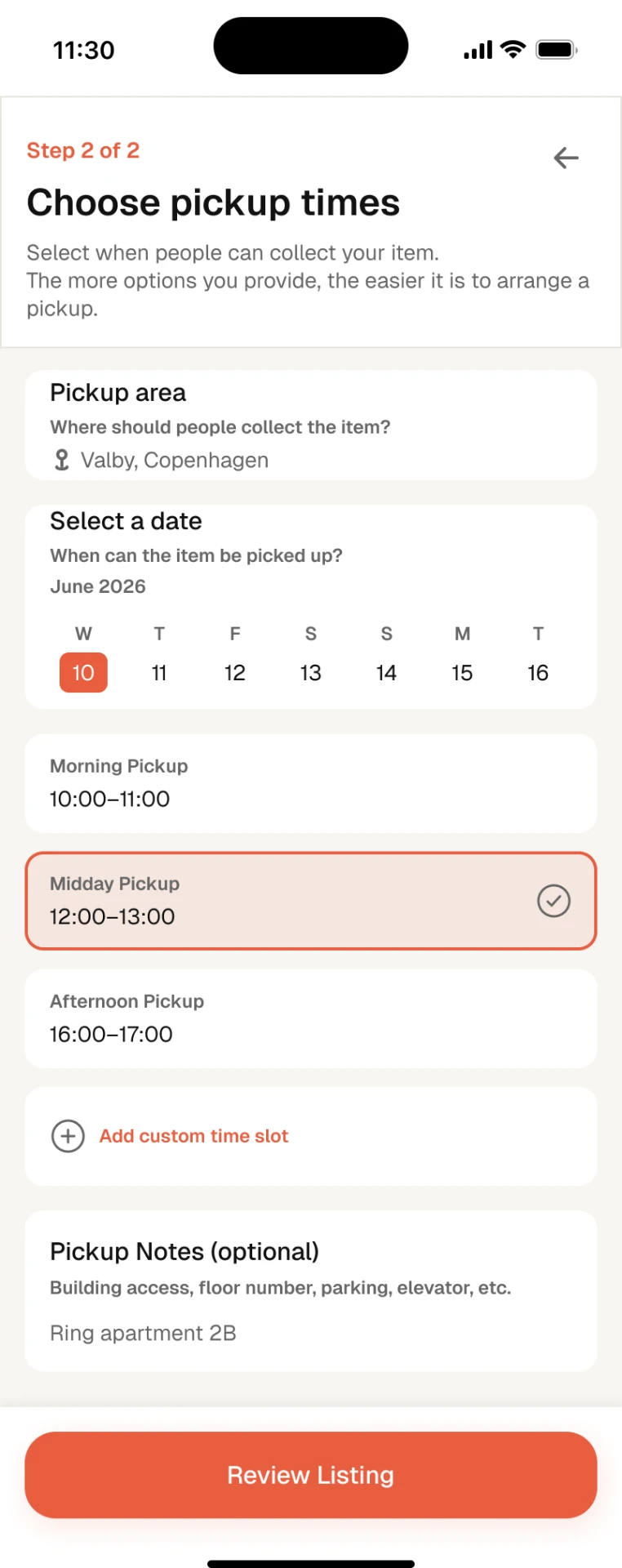
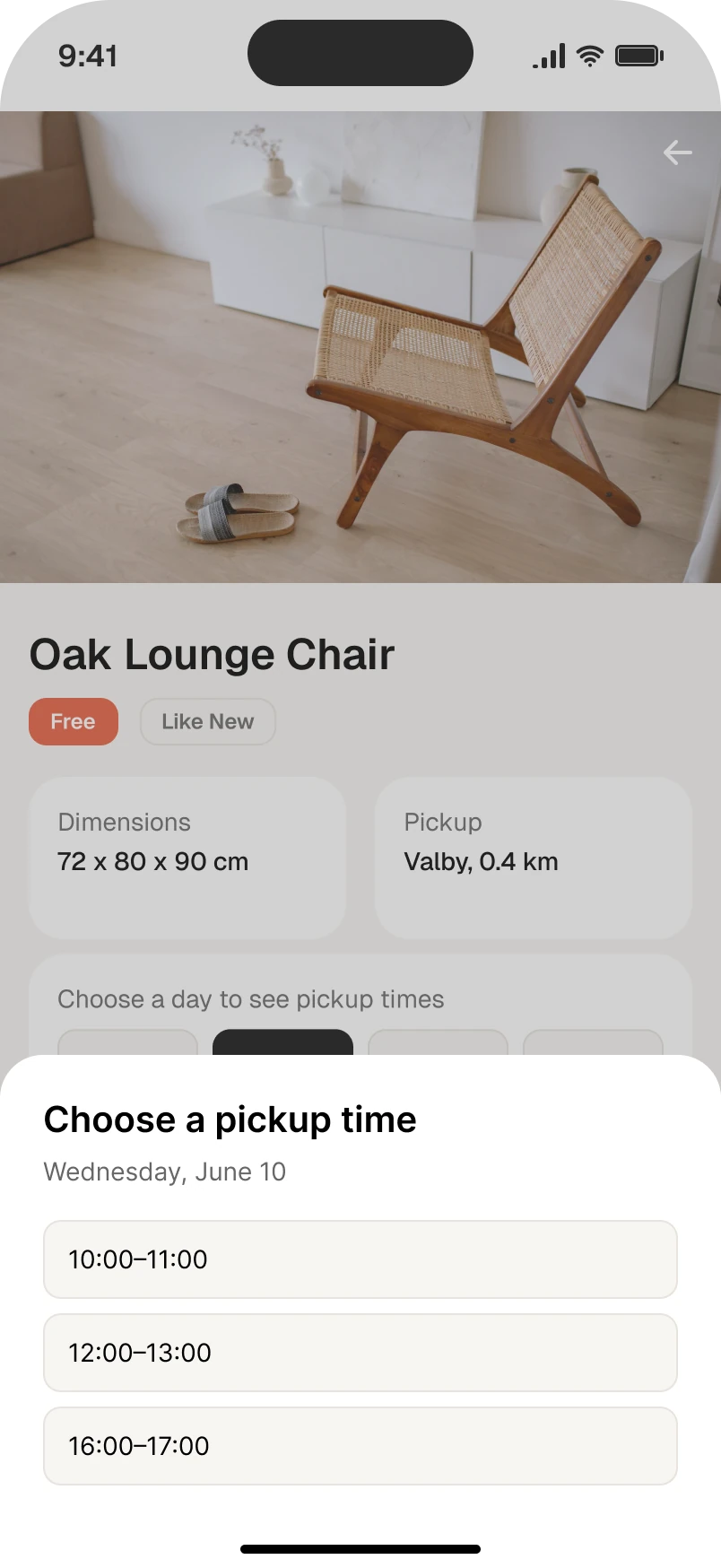
Let owners define pickup availability and let interested neighbours choose from those options.
Make the agreement explicit
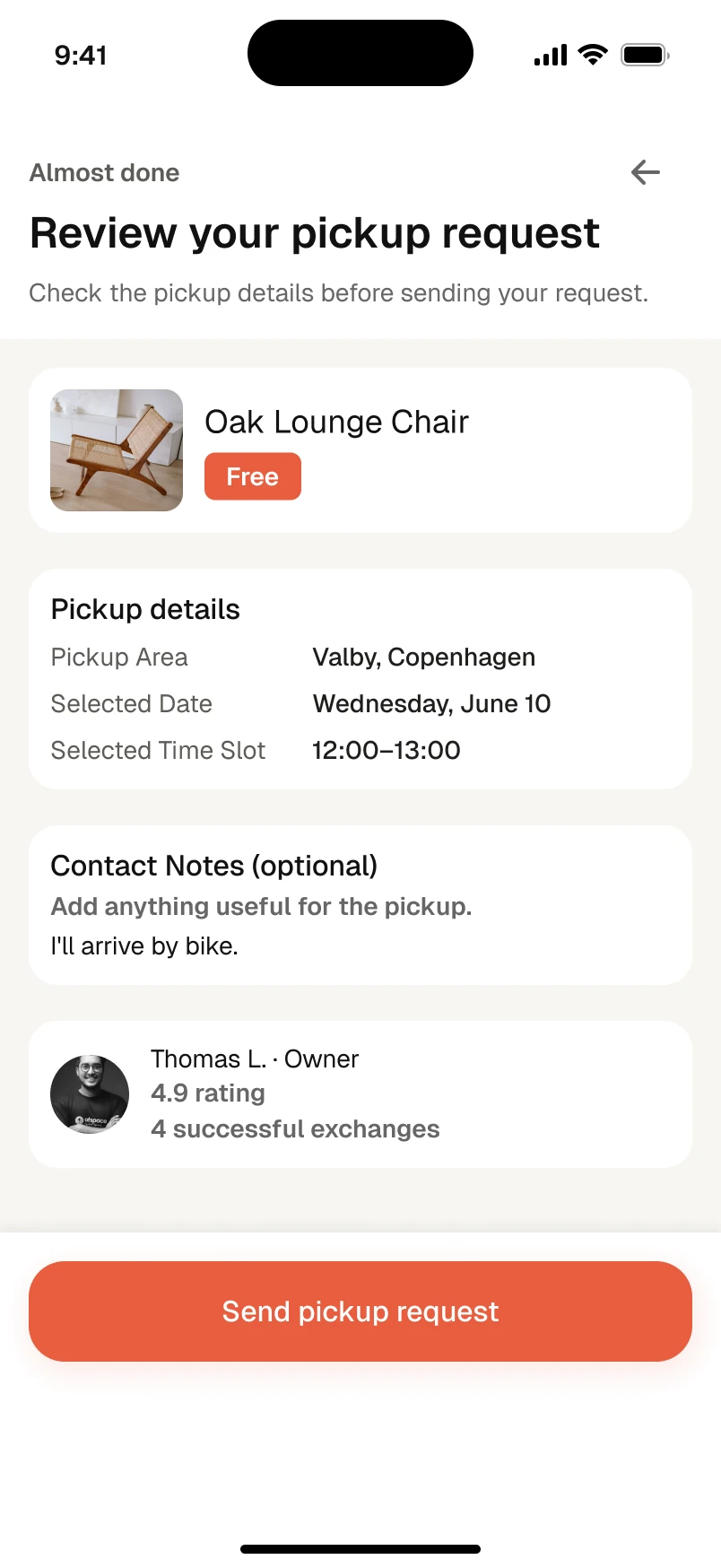
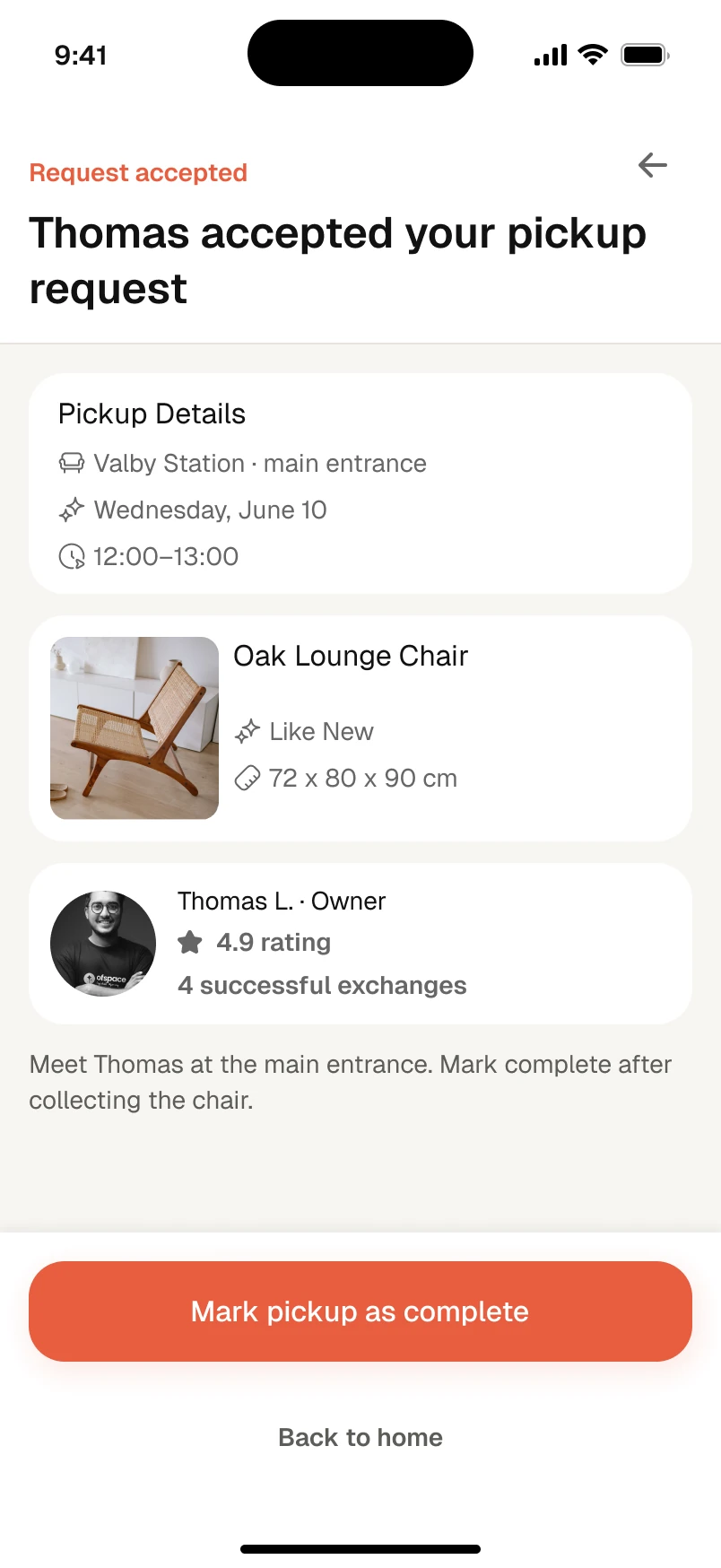
Let people review the pickup details before sending a request, and distinguish a pending request from an accepted pickup.
Give trust more context
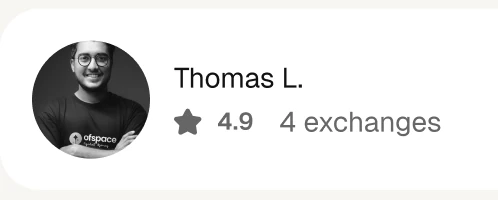
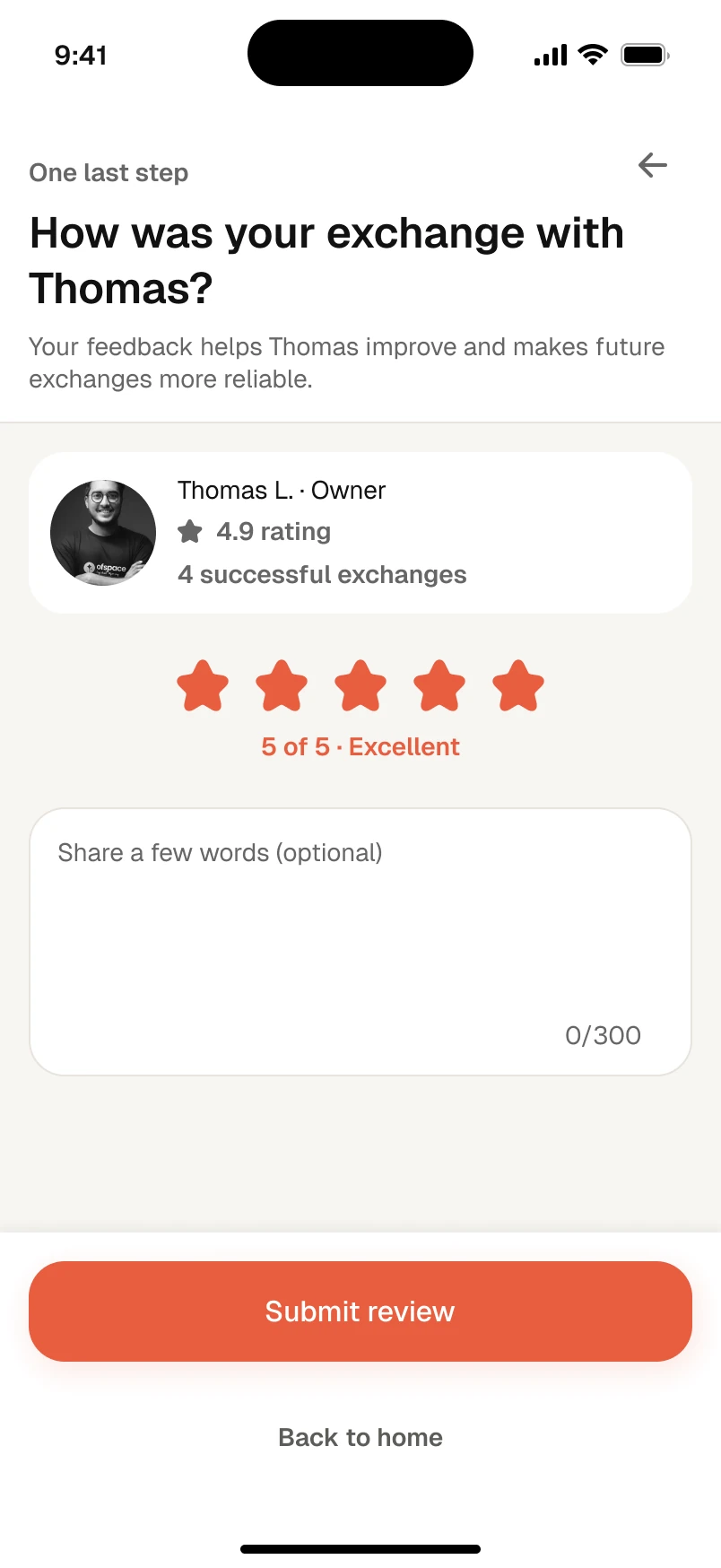
Show owner information before the exchange and collect feedback after completion.
The trade-off
Less flexibility. A more explicit agreement.
The structured flow gives people less freedom than open-ended chat, but makes the pickup time and request status explicit.
Final experience / 05
From discovery to a completed exchange.
Step A
Discover and choose
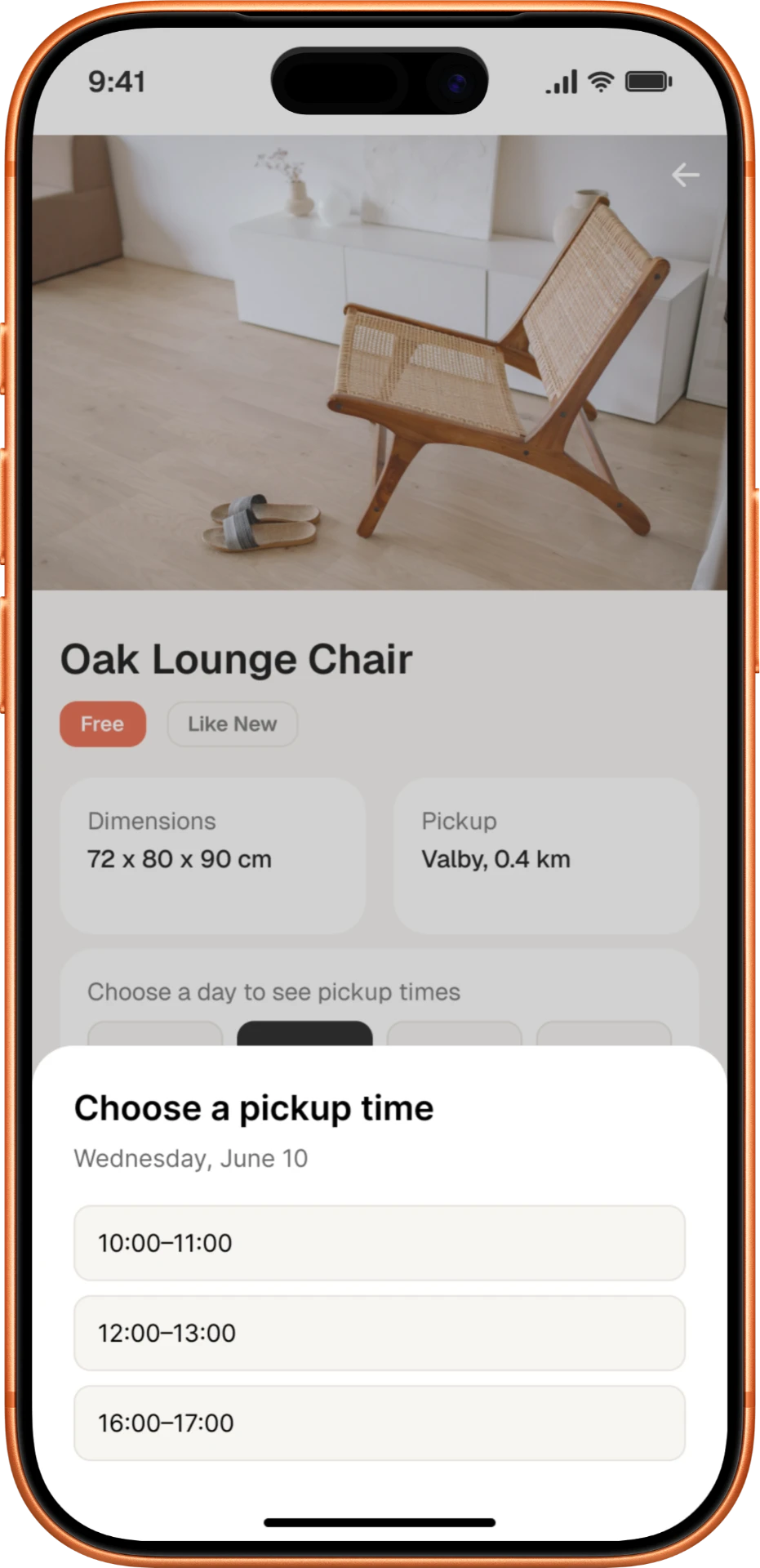
Browse nearby furniture, review a listing and choose a pickup time.
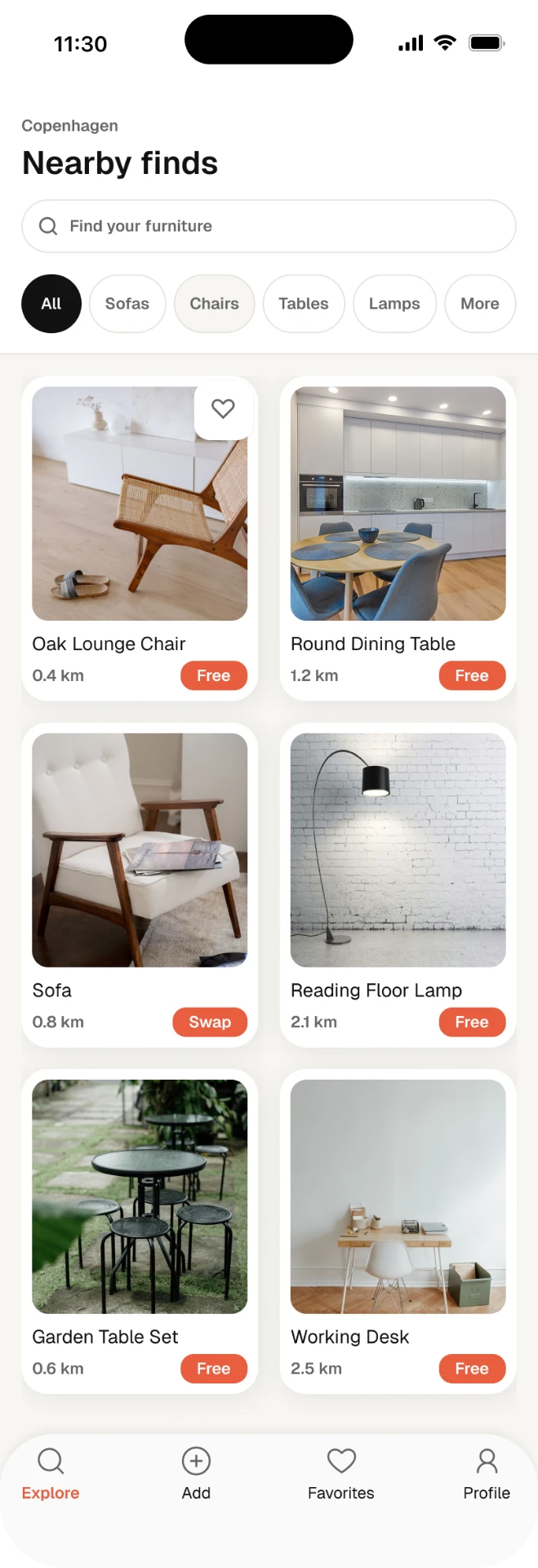
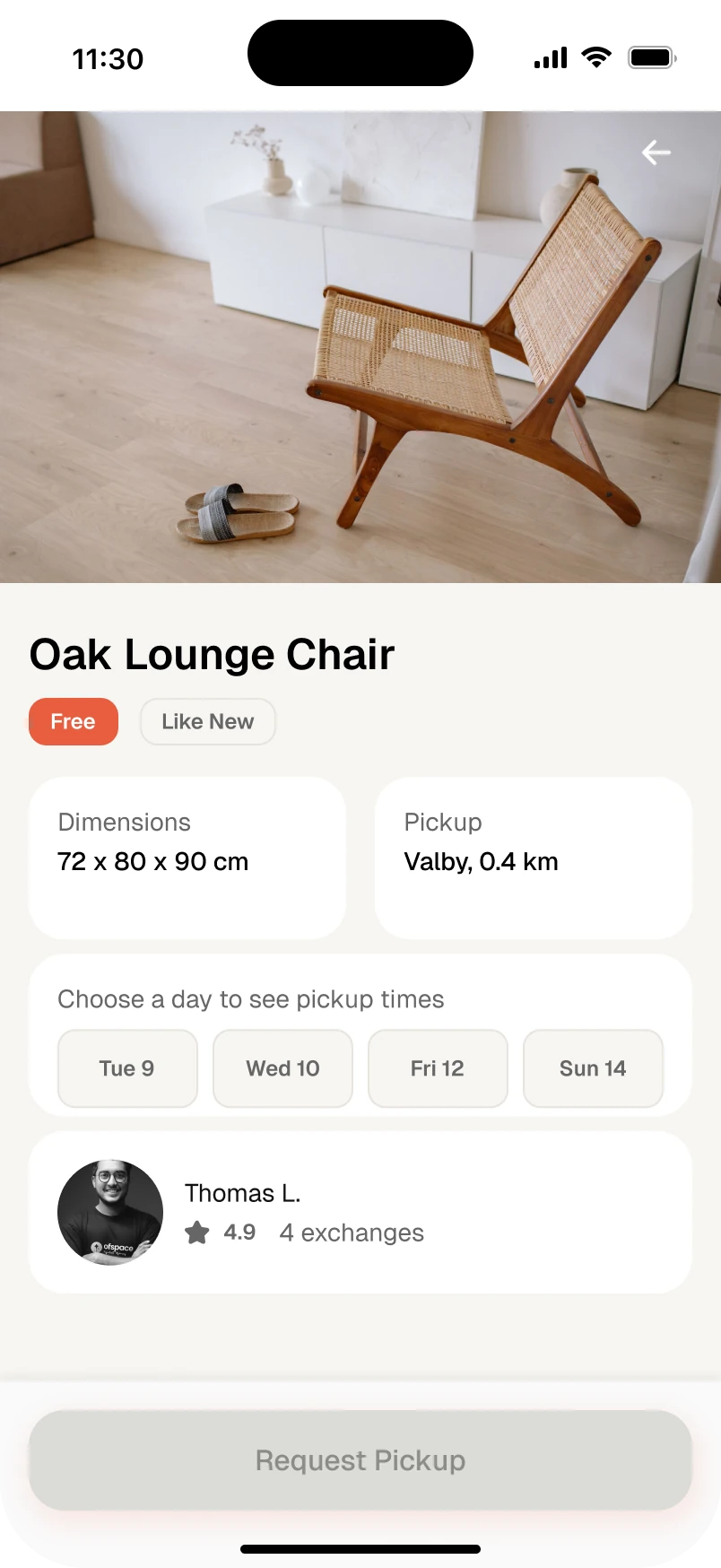
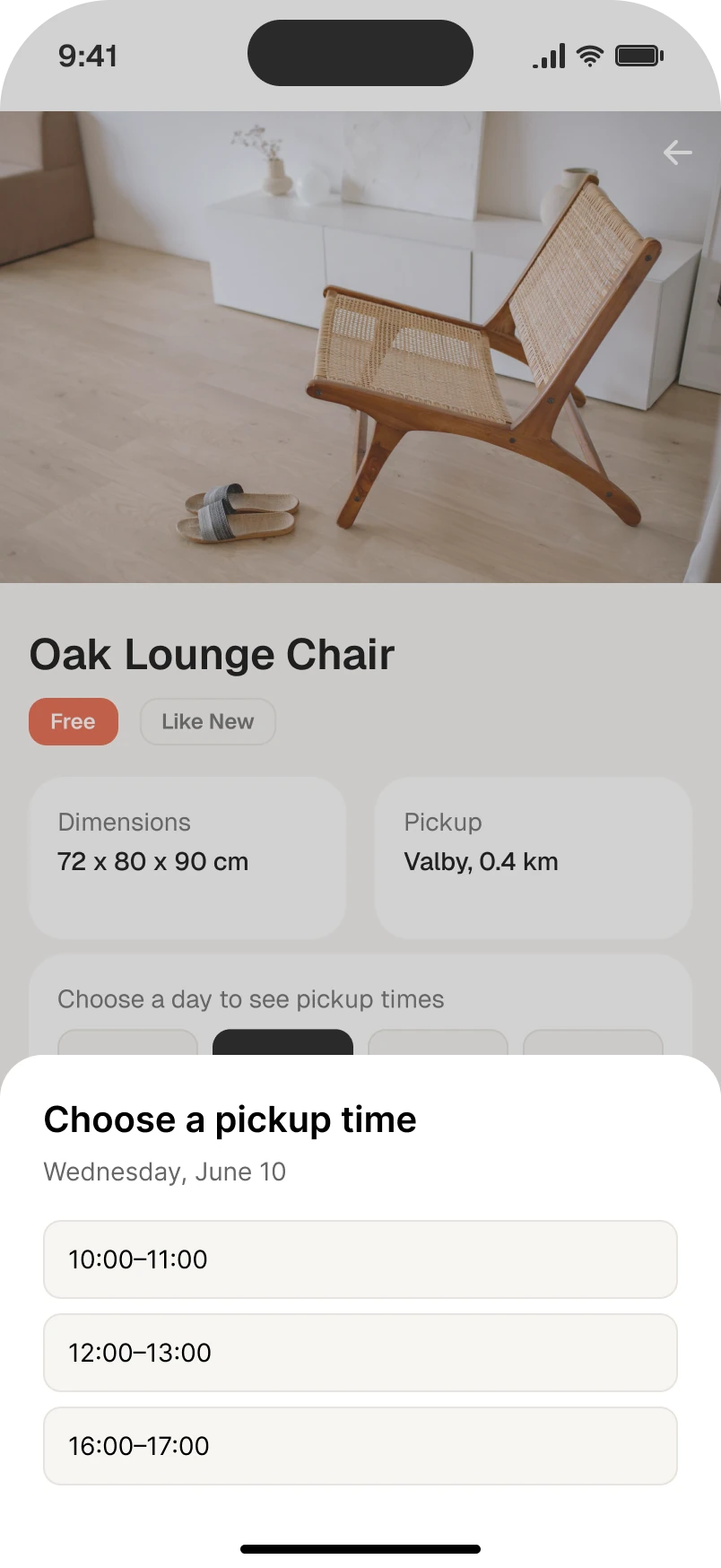
Available pickup times are shown in the listing, so neighbours can choose before sending a request.
Step B
Request and complete
Review the request, follow its status, complete the exchange and leave feedback.
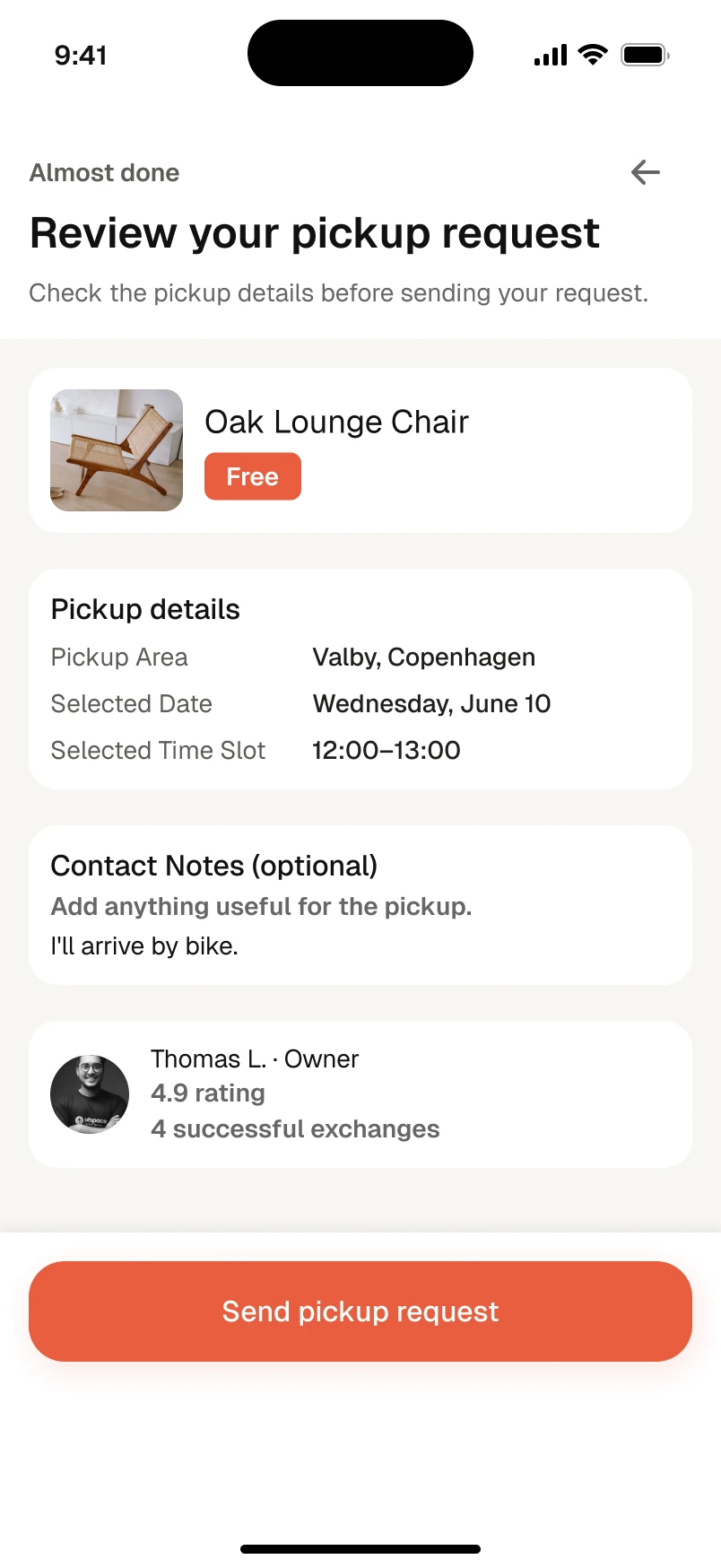
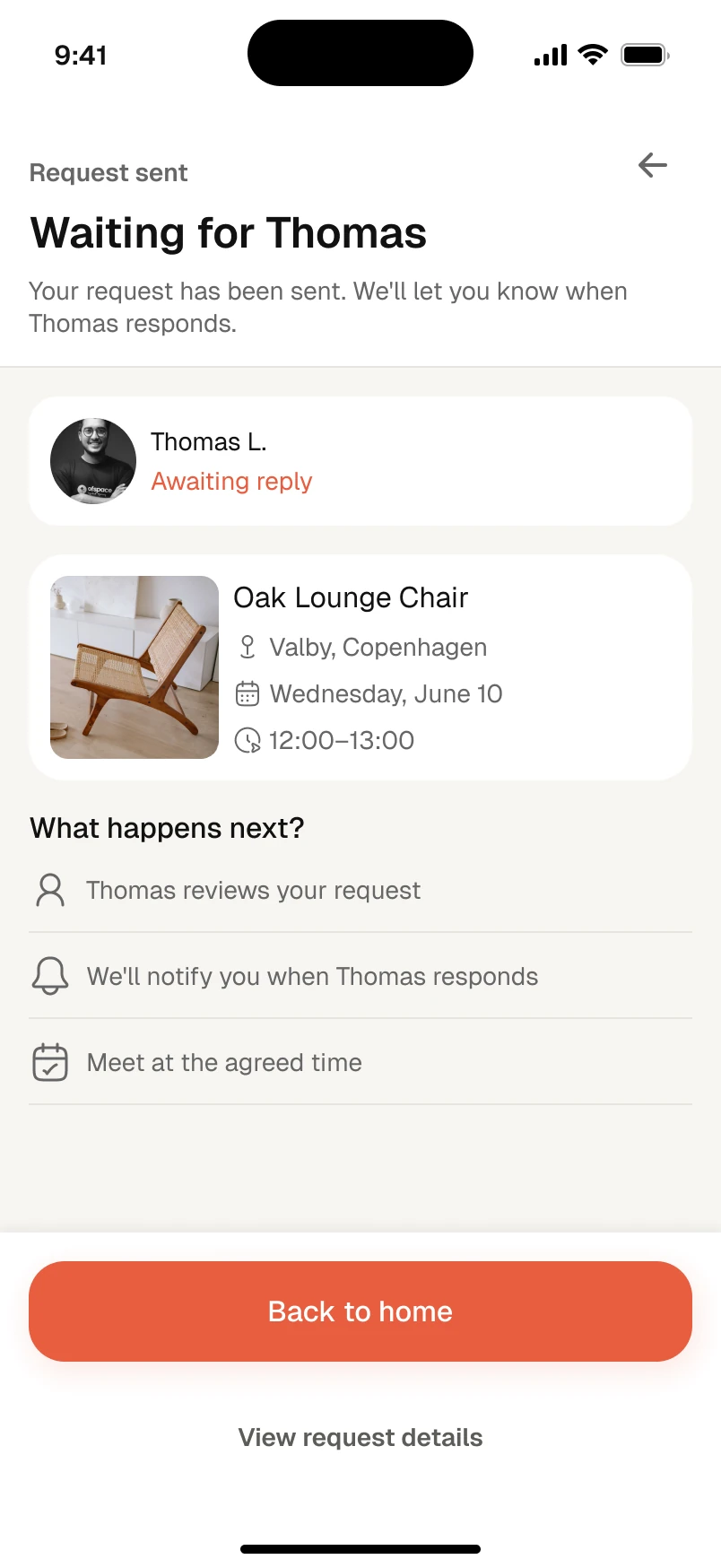
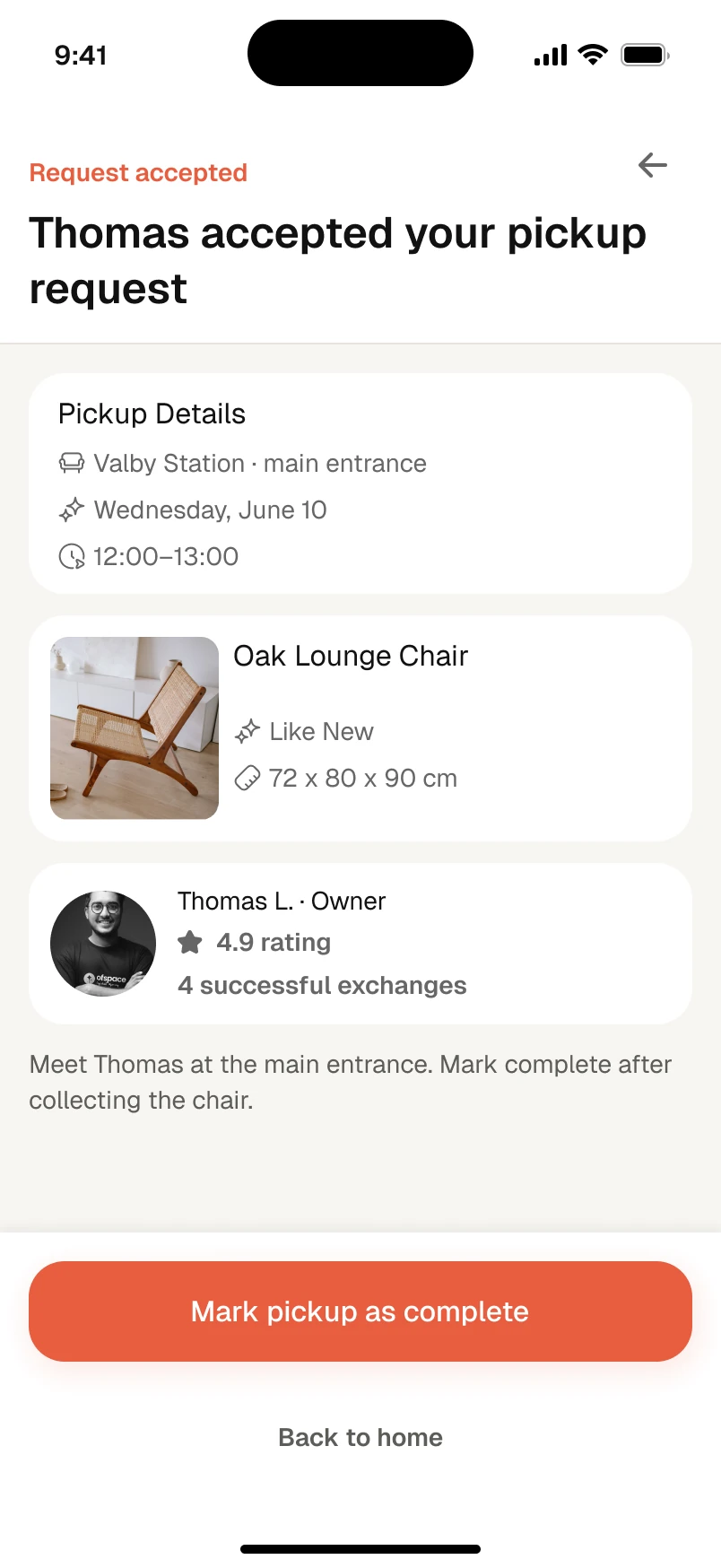
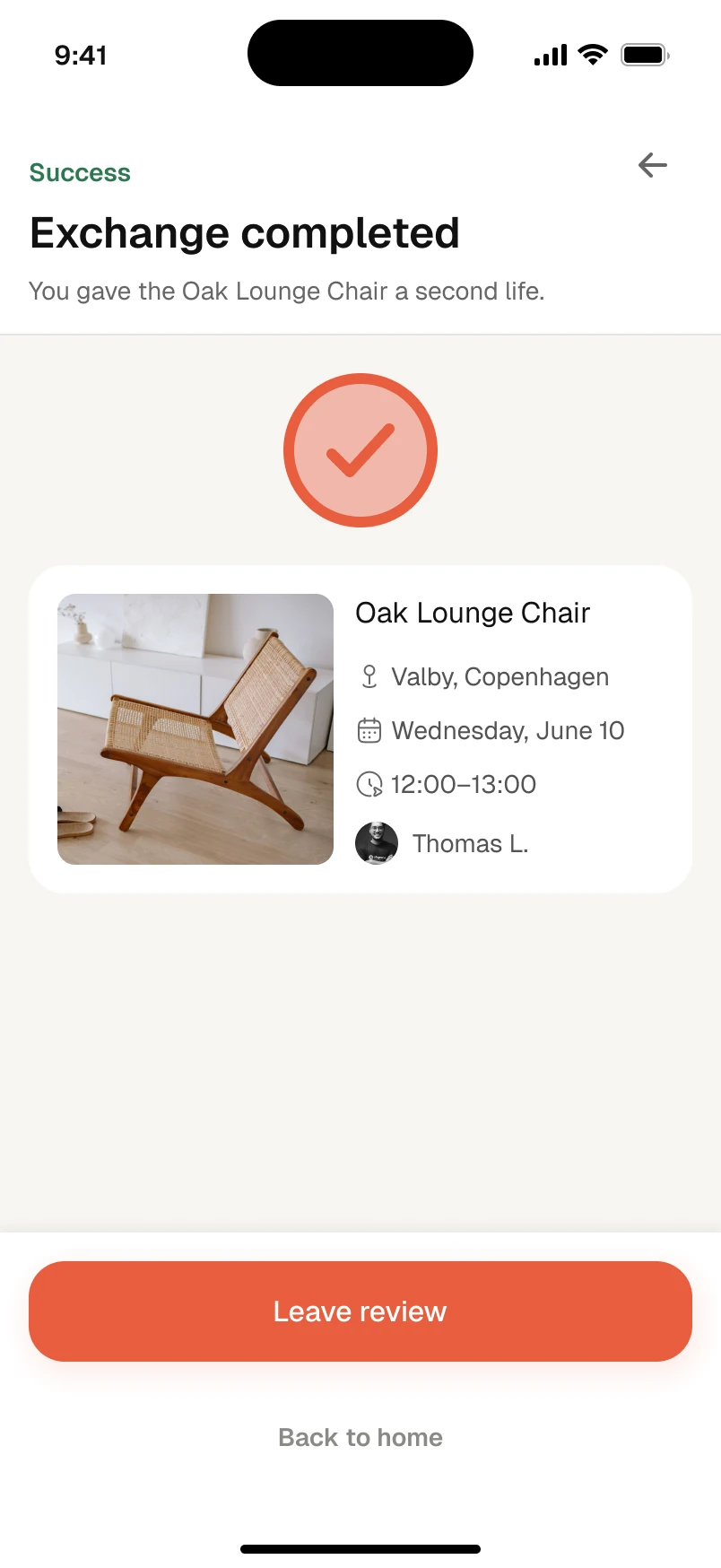
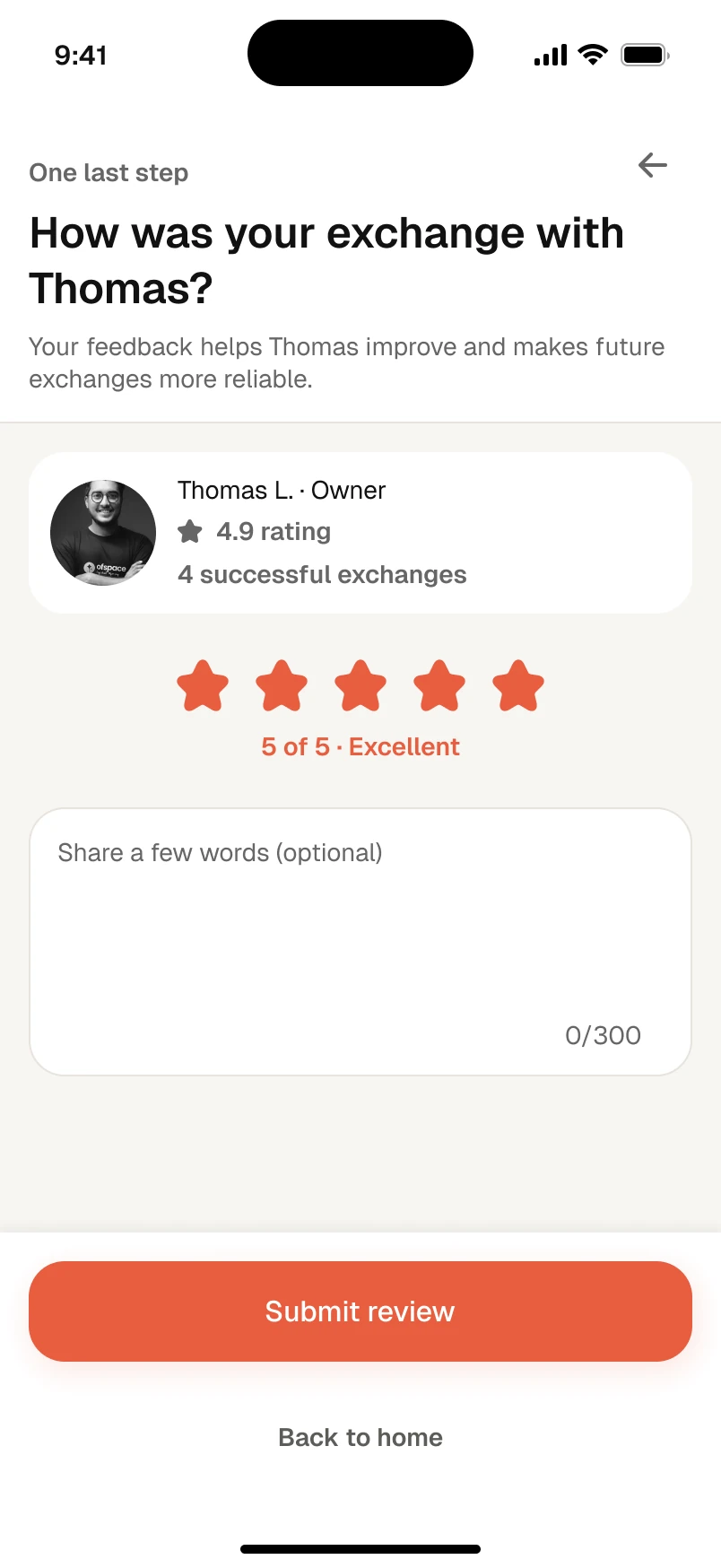
Sending a request doesn’t confirm the pickup. The owner’s acceptance makes the agreement explicit.
After the exchange, neighbours can mark it complete and leave feedback.
Step C
Publish and offer availability
Create a listing, define pickup availability, review the details and publish.
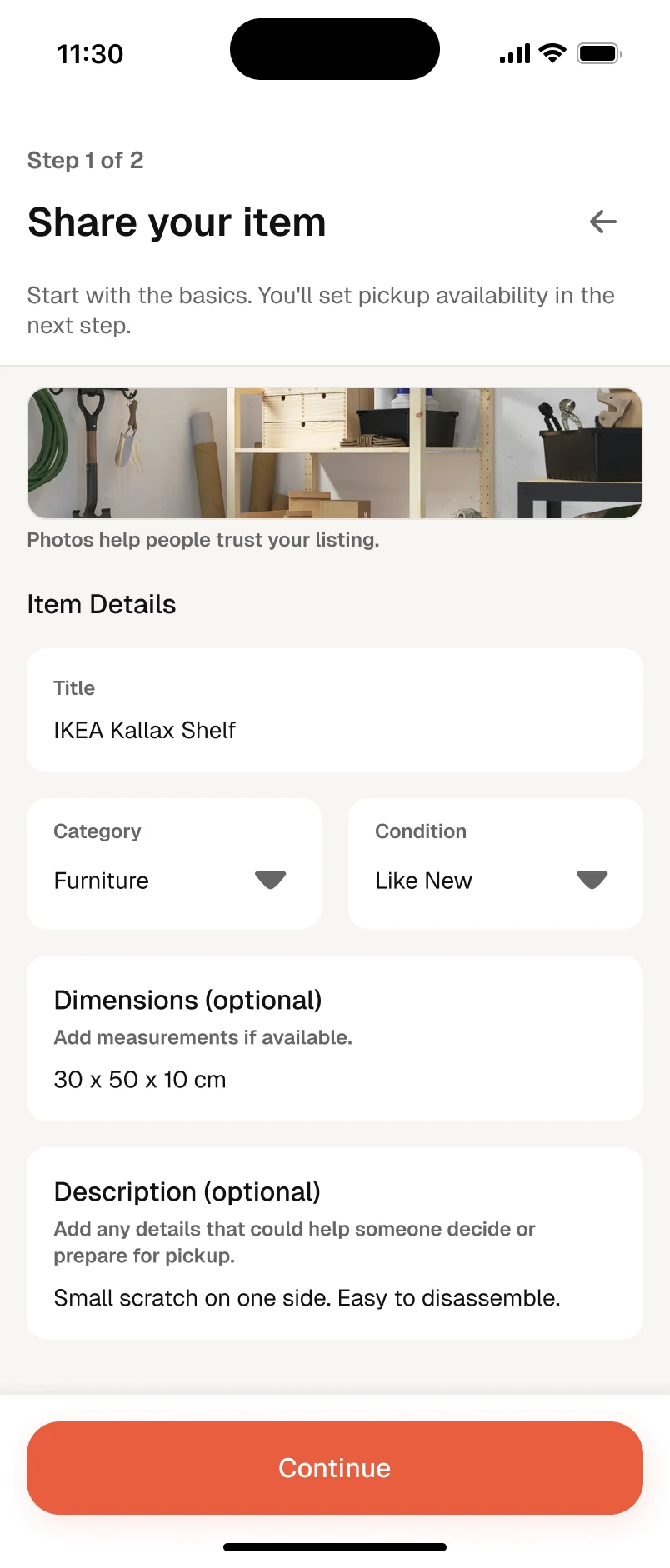
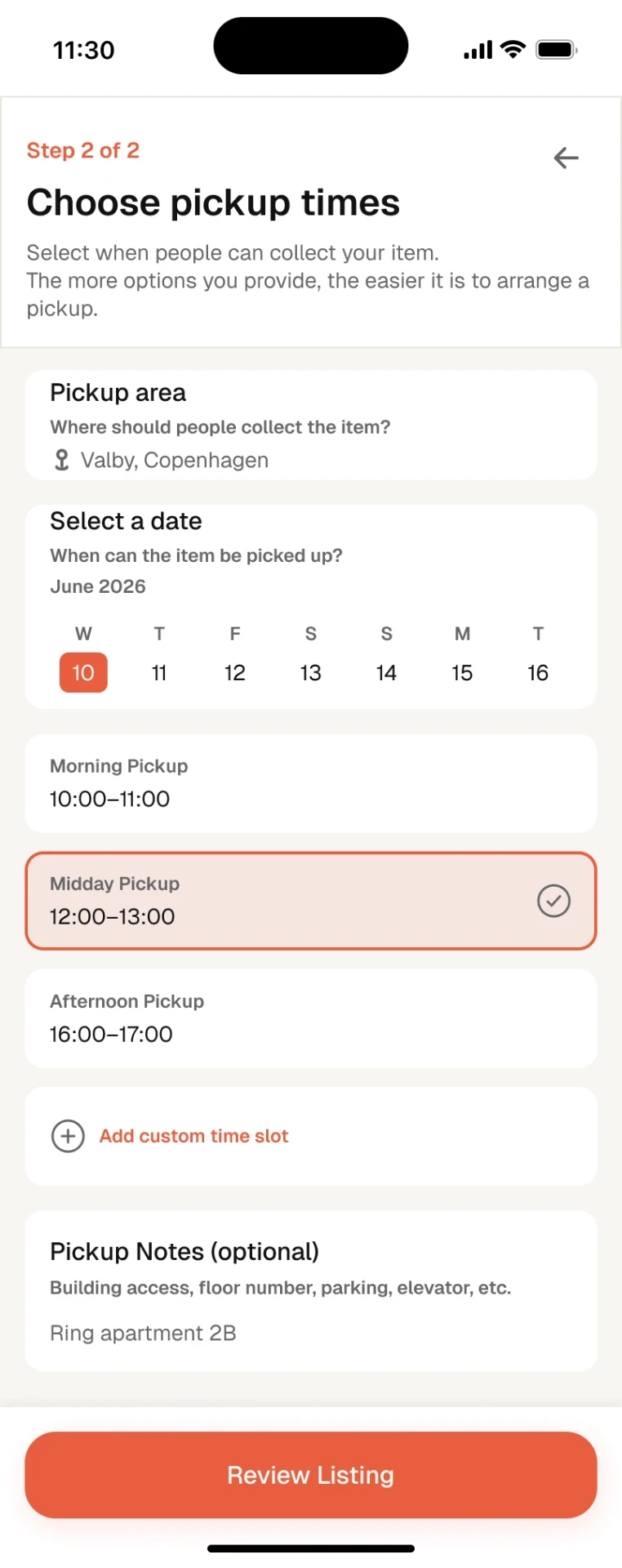
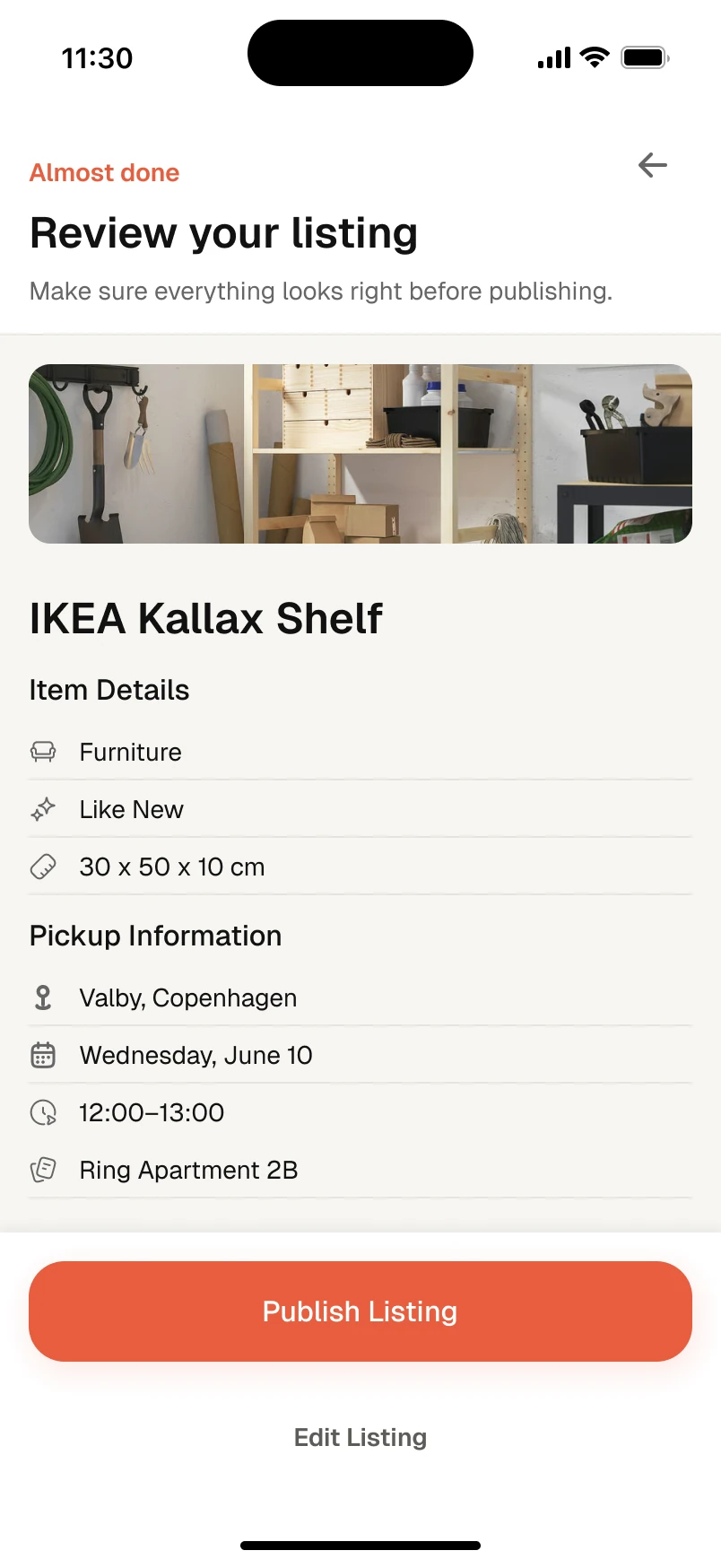
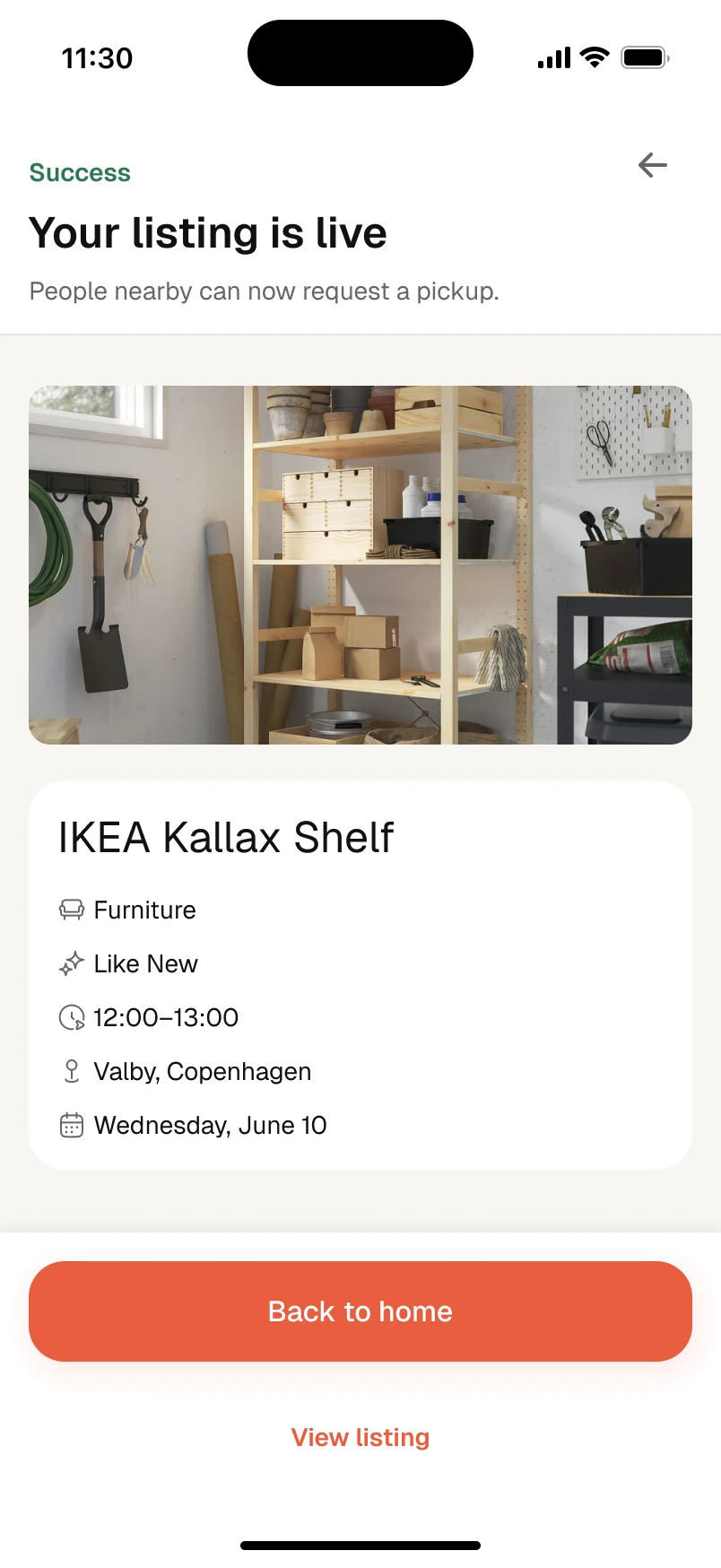
Owners define pickup availability before publishing, giving interested neighbours concrete options to choose from.
Intended outcomes
Reduce back-and-forth
Let neighbours choose from the owner’s available pickup times.
Make pickup status explicit
Distinguish a pending request from an accepted pickup.
Provide context before meeting
Show owner information, ratings and completed exchanges.
These are design goals for the concept. Their impact still needs validation.
Reflection / 06
What I learned—and what still needs testing.
What changed in my approach.
This project shifted my attention towards the moments that require agreement between people. In future projects, I would map those commitments and their failure points before designing the screens.
What remains uncertain.
The concept makes availability and request status explicit. Whether that is enough to reduce no-shows remains untested.
Limitation: formal usability testing was not conducted, so the proposed interaction and intended outcomes would need further validation.
What I would test next.
Commitment and no-shows
Do people understand when a pickup is pending and when it is confirmed?
Reminders
Would a reminder help people follow through on an accepted pickup?
Trust signals
Which information helps people feel comfortable meeting a neighbour?
Full project / 07
Want to go deeper?
Explore the research methodology, constraints and reasoning behind the concept.